Pre-cooling removes field heat before storage or transport. Done right, it stabilizes quality for produce moving from the Terai toward hill markets or into city distribution. This guide explains forced-air, hydro-cooling, and vacuum-cooling in clear terms, when each fits, and how to run simple SOPs that work with Nepal’s power reality. As the authorized ICEMAKE partner in Nepal, RM Agrotech helps design compact, serviceable pre-cooling lines that integrate with your cold rooms and dispatch flow.
Introduction
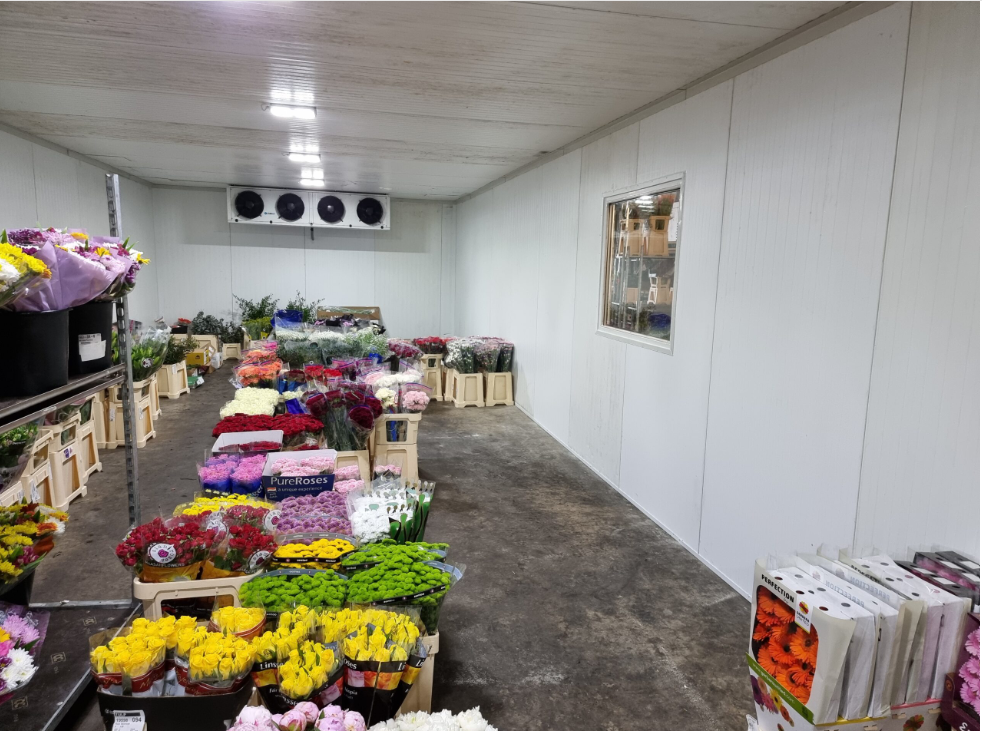
Produce often enters storage too warm. If field heat isn’t pulled out fast, the cold room becomes a bottleneck, humidity surges, and the first hours consume tomorrow’s runtime. Nepal’s mixed routes—short hops in the Valley, longer runs from the Terai, altitude shifts toward the hills—make pre-cooling the missing link between harvest and reliable storage. Pre-cooling is not complicated; it’s about airflow, water contact, or pressure used wisely, with hygiene and logs that teams can live with.
Market Reality / Pain Points
• Warm pallets block aisles while the room catches up.
• Condensation and wet cartons after loading warm product.
• Non-uniform core temperatures inside crates; quality disputes at delivery.
• Power dips during the first post-harvest rush; alarms spike.
• Over-sizing the cold room to compensate for missing pre-cooling.
How the Solution Works (clear, non-jargony)
Pre-cooling removes heat quickly before product goes to hold. Three common methods:
1) Forced-Air Pre-Cooling (FAPC)
Fans pull cold air through vented stacks under a tarp or hood, creating a pressure difference so air crosses produce, not just around it.
- Best for: Apples, citrus, capsicum, cucumbers, beans in vented crates.
- Needs: Vented packaging; good seals at the tarp; a compatible cold room or a dedicated coil.
2) Hydro-Cooling
Chilled, clean water flows over or immerses produce; water’s high heat capacity makes it fast.
- Best for: Corn, root crops in crates, some leafy items (if water quality & sanitation are controlled).
- Needs: Water treatment, filtration, and a strict hygiene program.
3) Vacuum-Cooling
Lowers pressure so internal water evaporates and carries away heat; extremely fast for porous leaves.
- Best for: Leafy greens, herbs—thin-leaf, high surface area.
- Needs: Dedicated chamber, trained SOPs; not ideal for dense fruits.
Features & Advantages
• Faster pull-down to target core temperatures.
• Calmer cold rooms (less load shock).
• Drier cartons, fewer label failures.
• More predictable dispatch and fewer complaints.
Nepal Use-Cases / Sectors
• Terai packhouses serving hill markets.
• Peri-urban growers supplying Kathmandu retailers.
• Export prep hubs trialing leafy greens and herbs.
• Co-ops pooling produce with mixed routes.
Operations & Best Practices
• Packaging first: Vented crates with aligned slots; avoid films that block airflow in FAPC.
• Air seals matter: In FAPC, the tarp/hood must kiss the stack—no big side leaks.
• Water discipline: In hydro-coolers, treat and filter water; sanitize hardware; drain and refresh on schedule.
• Measure the core: Use a calibrated probe—the center of the slowest-cooling pack.
• Staging flow: Harvest → grade → pre-cool → then into hold; don’t park warm pallets in the chiller.
• Power etiquette: Stabilizers/phase protection; small UPS for controller/logs; duration-filtered alarms during peak intake.
Compliance & Quality
Pre-cooling supports HACCP-style time–temperature control and aligns with DFTQC expectations for hygienic handling and records. For export-minded groups, consistent logs support ISO 22000-style programs.
Sustainability / Energy Considerations
• Short, targeted pre-cooling reduces cold-room re-cool time.
• Clean coils, good door discipline, and realistic setpoints keep energy steady.
• Hydro-coolers need water hygiene to avoid waste and rework.
Benefits / Outcomes (qualitative)
Uniform cores, faster turnover, calmer cold rooms, fewer temperature disputes, and better shelf confidence.
Implementation with RM Agrotech × ICEMAKE
We right-size FAPC tunnels or hydro-coolers, integrate with existing ICEMAKE systems, set probes & logs, train teams (Nepali/English SOP cards), and schedule early-life follow-ups through peak harvest.
Checklist — Launching Pre-Cooling
• Map crops, crate types, and route lengths.
• Pick method: FAPC / Hydro / Vacuum by product and hygiene reality.
• Confirm vented crates & aligned slots (FAPC).
• Set probe routine (start/end time; slowest-cooling pack).
• Plan staging: harvest → grade → pre-cool → hold → dispatch.
• Stabilizers/UPS; duration-filtered alarms for intake window.
• Post bilingual SOPs; schedule weekly trend review.
Call to Action
Need a compact, robust pre-cooling line that fits Nepal roads and power conditions? RM Agrotech × ICEMAKE will design and commission a practical setup your team can run daily.
FAQ
Q1. Can we use the main cold room coil for forced-air pre-cooling?
Yes, if airflow and sealing are designed; many sites use a hood/tarp and ducting with the existing coil.
Q2. Won’t hydro-cooling make cartons wet?
Use liners and drainage discipline; keep contact time short and water clean.
Q3. Is vacuum-cooling worth it for mixed crops?
It shines for leafy greens; for mixed produce, combine with FAPC or hydro for the rest.
Q4. How do we verify success?
Probe cores before/after; track time to target by crop and update SOPs.
Q5. What if power dips mid-cycle?
Controllers on a small UPS keep logic/logs; resume calmly once healthy power returns.